
Did "rule of thumb" come from a law about wife-beating?
The short answer
False. No law ever set a thumb-width limit for beating a wife, and the phrase meant a rough, practical method long before anyone linked it to that story. Here is where the legend came from and why it sounds true.
Verdict: False. "Rule of thumb" did not come from a law letting a man beat his wife with a stick no thicker than his thumb. No such law has ever been found, and the phrase was in print, meaning a rough method based on experience, about a century before anyone connected it with wife-beating. That connection was only made in the 1970s.
The real history is uncomfortable in its own way, though, and it explains why the story was so easy to believe.
What the phrase actually means, and where it shows up first
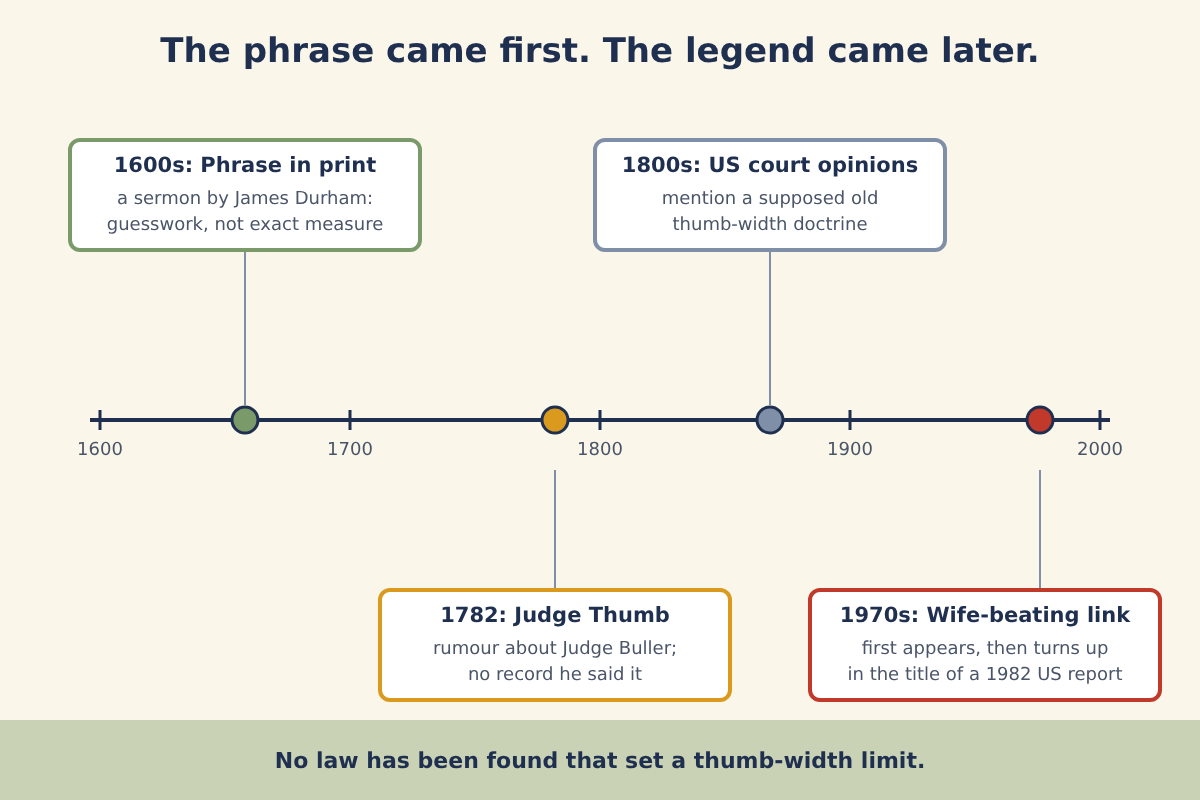
A rule of thumb is a practical, rough-and-ready guide: good enough for most cases, not exact. That is how the phrase was used from the start. Its earliest known appearance in print is in a sermon by the 17th-century preacher James Durham, who compared careless believers to builders who work by guesswork and rule of thumb instead of measuring properly.
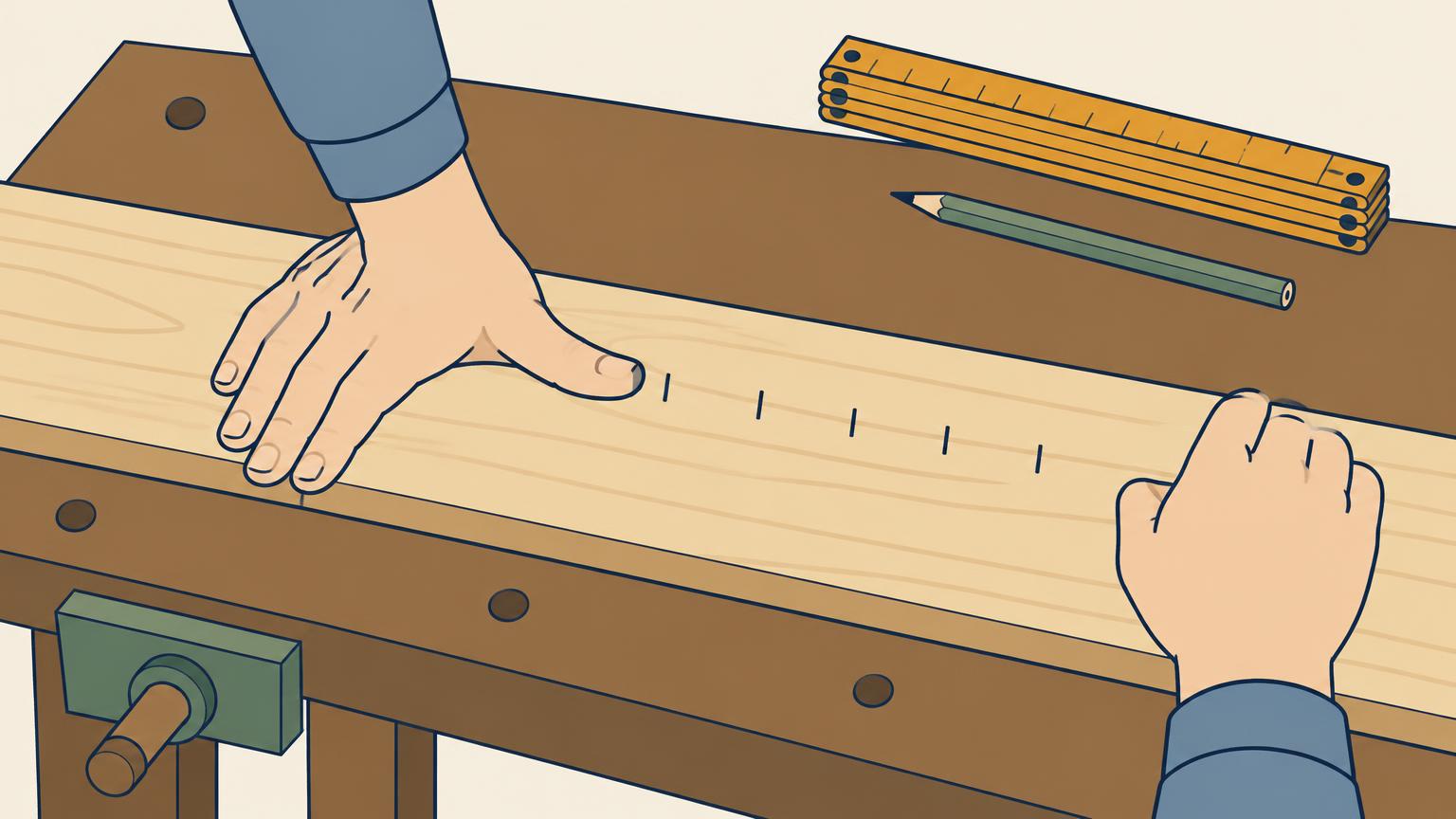
Nobody knows for certain where the image came from. The most likely explanation is the obvious one: people have long used parts of the body as handy measuring tools, and a thumb's width is roughly an inch. A carpenter or tailor checking a length with their thumb was working by eye and experience rather than with an exact ruler, which is precisely the sense the phrase has always had. That is a reasonable guess rather than a proven origin, and word historians are careful to say so.
Where the thumb-stick story came from
The legend has real ingredients, which is part of why it has lasted.
English common law did once allow a husband to physically "correct" his wife. William Blackstone's Commentaries on the Laws of England, published in the 1760s, describes an old law permitting moderate correction. It does not mention thumbs, sticks of any particular size, or any measurement at all.
The thumb appears in 1782, in a rumour about the English judge Sir Francis Buller. He was said to have ruled that a man could beat his wife as long as the stick was no thicker than his thumb. The rumour spread quickly, and the cartoonist James Gillray mocked him as "Judge Thumb" in a print whose caption offered "thumbsticks" for family correction, "warranted lawful". But there is no record that Buller ever made such a ruling. The lawyer and biographer Edward Foss, writing about English judges in 1870, found no solid evidence that he said it. The story stuck to Buller because it was a good joke at his expense, not because anyone could point to the case.
In the 19th century, a few American court opinions referred to a supposed ancient doctrine that allowed a husband to punish his wife with an implement no thicker than his thumb. The judges treated it as something from the past, and historians have not found an actual law that ever set such a limit.
None of these sources uses the phrase "rule of thumb". The link between the phrase and the thumb-stick story first appears in the 1970s, when campaigners against domestic violence drew attention to how leniently the law had treated it. The connection then reached a wide audience through a 1982 report by the US Commission on Civil Rights titled Under the Rule of Thumb. The University of Oregon's Jennifer Freyd has a short, careful essay on how the folk etymology spread and why getting it wrong matters.
Why the myth is so believable
People who repeat this story are not being gullible. The law really did tolerate violence against wives for centuries, judges really did talk about a thumb-width limit, and a cartoon of "Judge Thumb" really was published in 1782. The story ties those true and ugly facts to an everyday phrase, and a hidden dark meaning behind an ordinary saying is exactly the kind of fact people remember and pass on.
The trouble is the order of events. The phrase was in use first, with its familiar meaning. The thumb-stick rumour came later, and the two were stitched together later still. Sayings attract stories like this all the time; "lightning never strikes the same place twice" and "a red rag to a bull" have both outlived the facts they seem to describe.
So should you stop saying "rule of thumb"? That is a matter of taste, and some people prefer to avoid it because of the story it now carries. But if the reason is that the phrase was coined from a wife-beating law, the evidence does not support it. The history of violence that the legend points to is real. The idea that this phrase came from it is not.
